Dr. Paul Whitehorn (B.th, M.div, PhD)
From Shop Slang to Sheet Metal Science

From Shop Slang to Sheet Metal Science
Paul Whitehorn
-
From Shop Slang to Sheet Metal Science
Paul Whitehorn
-

Tokyo Lights
Lunar Arcade
Paul Whitehorn
Paul Whitehorn
Lunar Arcade

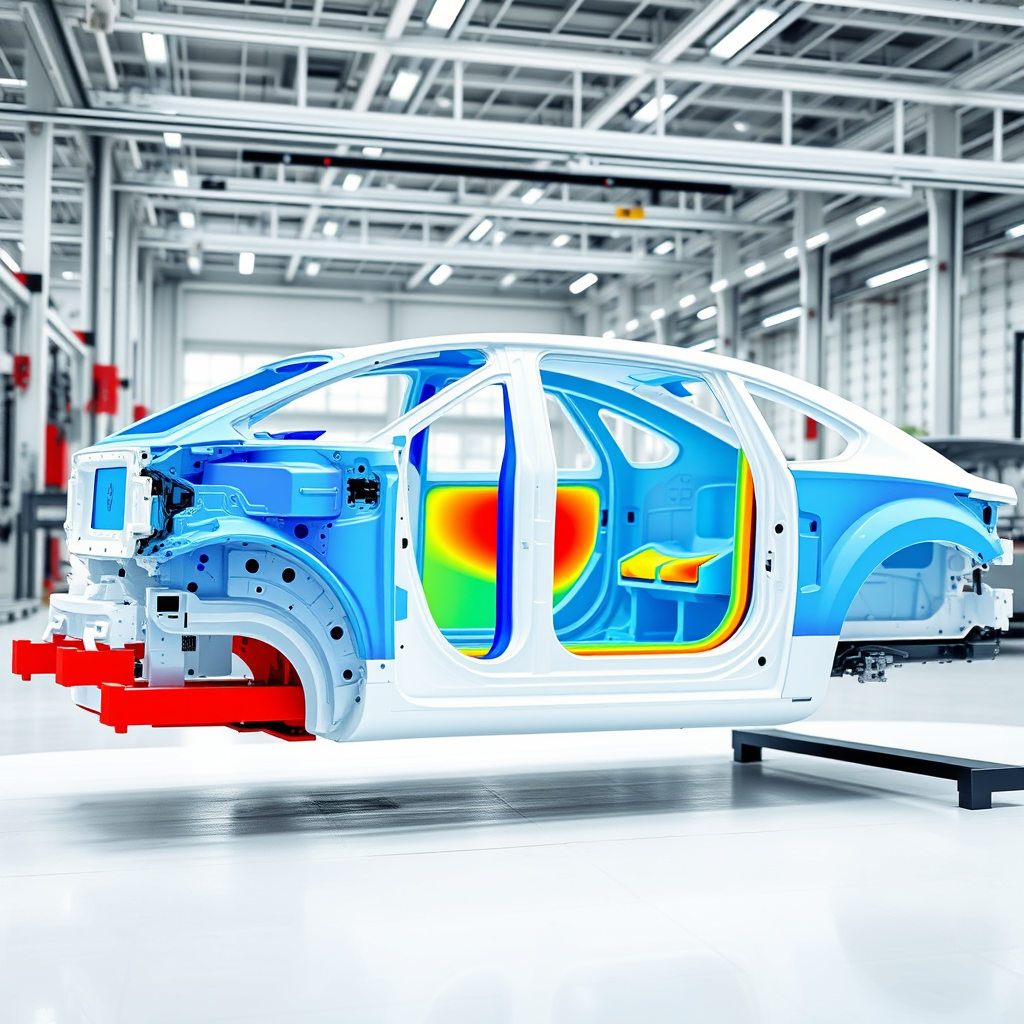
There are also moments in a repair when we say, “The panel is getting tight.”
We mean that after many cycles of pushing and releasing, the metal feels harder under the tool and does not want to move as easily. In the language of materials, this is strain hardening. The metal has been stressed beyond yield and worked back and forth enough that its internal structure has changed. It has become stronger and less ductile, which means it will resist further shaping and may not want to return fully to the original contour. Davies treats strain hardening as a key factor in choosing materials and planning forming operations for body panels.³
When we explain a difficult repair by saying, “The panel is beginning to show strain hardening from repeated deformation, so the last bit of distortion will require more precision and may not fully resolve without some refinish,” we are still being honest about the limits of the metal, but we do it in a way that lines up with how engineers already think.
Even the casual line “this panel has memory” has a real technical meaning. When we say that, we are noticing that the panel keeps trying to pop back to a certain shape. Provided the metal has not been fully stretched, the stamped form of the panel is stored in the elastic properties of the sheet. When we let go, the panel springs toward that form. In technical terms, this is elastic recovery or springback. Davies spends time on springback because it affects everything from die design to how panels behave in repair.³ Instead of saying that the panel “has memory,” we can say, “We are working against elastic springback that keeps trying to return the panel to its stamped form, so we are controlling both load and release to manage that recovery.”